I want to call regular visitor's attention to an interesting dialog I had with a gentlemen whose project I had covered on an earlier post. Larry Hall, Project Manager/Owner of SurvivalCondo was kind enough to respond to my coverage of his website back on September 13th. I enjoyed the opportunity to hear from someone who is working directly on a GreenZoneSolution and while we didn't agree on every point, I think it's safe to say there was a healthy exchange of ideas.
I want to thank Larry and invite everyone to take a look at our "conversation". Also, encourage anyone else to challenge me on these posts and my ideas. My point here is to learn about this emerging field and make a positive impact. I hope that I have not come across as having all the answers - I do not. But I have a lot of questions and I'm working out my opinions in this transparent environment where I welcome feedback from professionals like Larry to discuss Renewable, Reliable and Remarkable opportunities. Please take a look at the post and comments here.
Thanks,
Josh
Tuesday, October 13, 2009


Monday, October 12, 2009
GreenZone Infrastructure
In an ongoing examination of the aging infrastructure of the United States and search for GreenZoneSolutions to problems that arise as a result, I found an example of a small town in the Berkshires that when faced with violations of the Clean Water Act in 1972 committed to cleaning up the environment.
 Think wastewater treatment isn't a critical infrastructure? Try living without it for a while as people in many countries around the world do. The process is complicated and there are several different approaches to problem of producing clean water from sewage and storm water runoff. But the treatment plant in Ashfield, Massachusetts developed a system that is amazing.
 The Ashfield Wastewater Treatment Plant (AWWTP) is built on a hybrid of conventional and green infrastructure. It's so green in fact that at first glance one might even mistake the facility for a tropical plant nursery, thanks to the 10,500 square foot greenhouse cleverly (and beautifully) concealing 48 one thousand gallon solar conditioning tanks, a pond, and a constructed wetland.
 The entire structure is practically its own mini-biome (my word) housing a banana tree, turtles & snails, fish, and a parrot flying free among a carefully balanced community of microorganisms, all working together to produce about 25 thousand gallons of clean water each day with a minimal amount of added chemicals and less byproduct than conventional systems. The whole system is an example of sustainable design in motion, not to mention good, efficient design (the plant runs with one fulltime staff member and a part time assistant).
 But what makes the AWWTP a GreenZoneSolution is the facility's participation in the Massachusetts Water/Wastewater Agency Response Network (MaWARN), a mutual aid agreement between other water districts across Massachusetts whom agree to provide rapid assistance to restore services damaged by natural or man-made incidents.
Members of MaWARN also benefit from a streamlined process built in specifically for water utilities including:
Think wastewater treatment isn't a critical infrastructure? Try living without it for a while as people in many countries around the world do. The process is complicated and there are several different approaches to problem of producing clean water from sewage and storm water runoff. But the treatment plant in Ashfield, Massachusetts developed a system that is amazing. The Ashfield Wastewater Treatment Plant (AWWTP) is built on a hybrid of conventional and green infrastructure. It's so green in fact that at first glance one might even mistake the facility for a tropical plant nursery, thanks to the 10,500 square foot greenhouse cleverly (and beautifully) concealing 48 one thousand gallon solar conditioning tanks, a pond, and a constructed wetland.The entire structure is practically its own mini-biome (my word) housing a banana tree, turtles & snails, fish, and a parrot flying free among a carefully balanced community of microorganisms, all working together to produce about 25 thousand gallons of clean water each day with a minimal amount of added chemicals and less byproduct than conventional systems. The whole system is an example of sustainable design in motion, not to mention good, efficient design (the plant runs with one fulltime staff member and a part time assistant).But what makes the AWWTP a GreenZoneSolution is the facility's participation in the Massachusetts Water/Wastewater Agency Response Network (MaWARN), a mutual aid agreement between other water districts across Massachusetts whom agree to provide rapid assistance to restore services damaged by natural or man-made incidents.Water and wastewater systems provide our communities with a life-sustaining resource that is of vital importance to maintaining public health, sanitation, and safety. When water and wastewater services are interrupted for extended periods of time, a community's well-being quickly deteriorates, as evidenced by Hurricane Katrina. And without adequate water supply, our communities are vulnerable to devastating fires. By restoring water and wastewater service in the most efficient manner possible, MAWARN provides renewed hope for fast recovery from such disasters.
Members of MaWARN also benefit from a streamlined process built in specifically for water utilities including:
- Eligibility for Federal Emergency Management Agency (FEMA) disaster reimbursement - In case of a federally declared emergency, FEMA reimbursement for received services is contingent upon a pre-existing, signed mutual aid and assistance agreement.
- Timely access to resources - Some emergency aid is contingent upon a disaster declaration from a local or state official. MWARN does not require a state disaster declaration, which means systems can get needed resources faster.
- It is consistent with the National Incident Management System (NIMS) the current standard around the country for all-hazards emergency management.
Friday, October 9, 2009

Thursday, October 8, 2009
FEMA City for sale
 FEMA has just listed about 1250 travel trailers and mobile homes on the GSA auction website. It appears most of the units were used as long term shelter for residents of the Gulf Coast that were left homeless following Hurricane Katrina. Following the storm, some of the trailers were set up in camps where electrical and sewer infrastructure had been built for this specific purpose, while others were parked next to damaged homes so residents could stay in the community to make repairs. As of June 2009 there were still more than 3000 families living in the trailers.
 In his latest book, Camps: a Guide to 21st Century Space, Charlie Hailey, Assistant Professor of Architecture at the University of Florida, dives deep into the FEMA cities that have sprung up following major disasters. He examines not only the logistical issues that arise when creating an infrastructure practically overnight in the middle of a cow field and then filling it with trailers and people that have never met, all while a community is still reeling from crisis, but also he considers how the physical layout of the impromptu neighborhood affects the social dynamics as well. Charlie goes beyond simply examining the aesthetic and functional aspects and connects it with the complicated, sometimes contrary, politics of disaster management. He sites sources that reported 140,000 FEMA trailers were still in use or in service in two gulf states one year after Katrina.
FEMA will not guarantee the condition of any of the trailers that are now up for sale, and in a very unscientific survey of a few of them I noticed disclaimers that would make a person with just a bit of common sense pause before purchasing one.
Quotes from the GSA Auction postings:
NO KEYS, NO HOLDING TANK, OPTIONS:NONE, MAJOR MISSING ITEMS: WATER HEATER DOOR, PROPANE TANK COVER, SAFETY CHAIN HOOKS, OBVIOUS DAMAGE(INTERNAL): CABINET DOORS DAMAGED, DINING ROOM SEAT DAMAGED, SOFA DAMAGED. OBVIOUS DAMAGE(EXTERNAL):NONE ** REQUIRED BUT NOT LIMITED TO: WATER INTRUSION DAMAGE, MISSING AND NON-OPERABLE COMPONENTS, STORM USAGE AND ROAD STRUCTURAL DAMAGE.
...and if that were not enough to deter a buyer, the following is in bold red:
THE GOVERNMENT MAY NOT HAVE TESTED ALL OF THESE UNITS FOR FORMALDEHYDE. Formaldehyde is used in the manufacture of travel trailers, park models and manufactured housing and may still be present in these units.
But the good news is that prices start at about $1500.
 The long-term effects of exposure to formaldehyde are rather well documented at this point. Reports of people who have been living for extended periods developing chronic health problems are rather common. And whether the claims are true or not or somewhere in between, the trailers themselves have become a symbol of a government quick fix solution with a minimal amount consideration of long term consequences, where financial, social or sustainability are not concerns that were taken into account.
 While reviewing the updated 2009 LEED standards, I noticed that minimum program requirements state that structures must be "designed for, constructed on, and operated on a permanent location on already existing land. No building or space that is designed to move at any point in its lifetime may pursue LEED certification". I am just wondering what Bucky would say about that?
LEED for RV's anyone? It's an opportunity to create an option that is Renewable, Reliable and Remarkable.
Wednesday, October 7, 2009
Segway over to a GreenZoneSolution
 Segway has always taken on lead on innovative personal transportation design using renewable resources, but with the new x2 Adventure, they add a degree of ruggedness that bring it into the realm of a GreenZoneSolution. The x2 is specifically designed for off-road recreation use or any other application that will require a durable, rechargeable transportation solution. If you are looking for a vehicle with a top speed of about 12 mph, a range of 12 miles and a selection of accessories big enough to make you dizzy, the x2 Adventure is worthy of consideration.
 The x2 Patroller is based on the same chassis as the Adventure but is outfitted for public safety professionals with integrated warning lights, bumpers, reflective shields and cargo frame to carry extra gear like medical bags. The Patroller gives police officers the ability to maintain a line of sight head and shoulders above the crowd and silently cruise the streets and interact with the public in a unique way. Another key benefit is that the vehicles can safely operate indoors because there are no harmful exhaust fumes to be concerned about. Other public safety minded add-ons include hard-sided cargo cases, LED light kits, reflectors and ramps to assist with loading into a vehicle. Segway claims its vehicles are in service in over 1000 facilities and communities around the world including fire departments in Chicago and Philadelphia.
 Segway takes their commitment to sustainability just as seriously as their dedication to innovation and dependability.You can read about it on their blog, the Last Mile where they highlight progress on many green initiatives with a social mission.
 Segway makes it easy to calculate the difference public safety departments can save in fuel and money with a Green Calculator that is hosted a social network (think Facebook) where users and enthusiasts can also share stories, ideas, photos and videos. The vehicles run on lithium ion batteries and Segway sponsors a program where they will purchase renewable energy credits, about 200 kWh (enough to keep a busy x2 running all day) of sustainably generated electricity. This is particularly advantageous to public safety departments where SUV's and cruisers can spend a fair amount of the day idling.
 Segways may have gotten a bad rap in the past, but with these lastest innovations they are looking to take a well deserved mention as a Renewable, Reliable and Remarkable GreenZoneSolution.
Tuesday, October 6, 2009
Shibumi? What is he talking about now?!
I am very interested (okay, obsessed...) with integrating the principles of sustainable design with those of disaster mitigation at all levels from the community on down to the individual. In this case, mitigation is defined as the placement of systems that will reduce the likelihood of a disaster happening, or should an incident occur, make recovery from it easier and more cost effective. Most of my colleagues describe themselves as planners. Thesaurus.com says planner is synonymous with designer, but now having spent a mere 4 weeks into the beginning of a formal study in design, I am reluctant to equate the two. It is my hope to create a paradigm shift in my field.
Planners are more interested in what Jeremy Faludi describes as engineering versus design, in that engineers reduce impact without requiring changes in behavior but designers looks for ways to reduce impact by making adjustments in habits the focus of a process. This subtle but significant distinction that I recently became aware of will probably make me an outlier among my peers as I insist on including this during conversations.
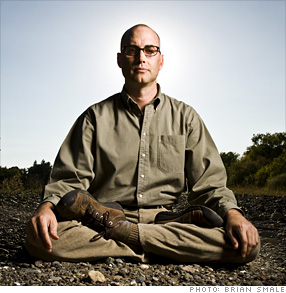 Faludi also identifies persuasion as a science, defining it as "crafting a product's user experience so that the user's actual interaction with the product changes their behavior." I like this but disagree on his claim that BJ Fogg has the monopoly on intellectual property. What Fogg calls Persuasive Technology sounds similar to what Tom Kelley of IDEO writes about in his book, 10 faces of innovation. IDEO has become the leader in user experience design and I think between the both of these two big thinkers, a lot can be learned when merging technical information with big ideas and diverse cultures. Funny, both Tom and Jeremy are both professors at Stanford...
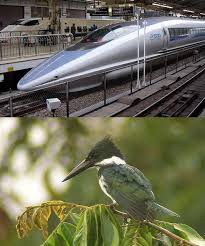 More ideas can be borrowed from Janine Benyus and her ideas around biomimicry, particularly when she describes "bringing a biologist to the table" to solve problems - maybe in this case, more an metaphor for inviting a variety of professionals to the planning process all focused on specific issues but with completely different approaches. Identifying and understanding competing and complimentary agendas are a critical first step in making the leap to Integrated Design. There are opportunities to create real change, and even synergy, here if people are willing to be open-minded and listen.
One of the first steps in disaster mitigation involves a hazard vulnerability analysis (HVA), a process where a multi-disciplinary team familiar with the project makes a subjective assessment of a community's or facility's weaknesses and tries to determine just how much operations would be impacted under a variety of adverse conditions. The HVA process puts a numeric value on each of the dozens of possible situations that any one community might find itself in. Is the community likely to be flooded and if so, where are the areas that first responders should focus first? What systems can be built to reduce flooding in those most sensitive locations and should they become impacted, what is the process to remove water? These are the kinds of questions an HVA draws attention to. My hope is to introduce sustainable design to the conversation.
 But like any design process, emergency management runs into inertia, as pointed out by Faludi. Mitigation can be very boring when compared to the other formal phases of a crisis: preparation, response and recovery - which are implemented during an actual event versus hypothetical situations. Like any other organization resources (time, money, staff) are limited. In public safety, large incidents are dealt with using the Incident Command System (ICS), a common management structure that is supposed to bring many different organizations under the same umbrella and identify methods to coordinate and combine existing command structures in an effort to reach a successful conclusion to a situation. It is a method to manage a system of systems. The elements of a successful ICS sound very similar to what Nadav Malin identifies as key features of an effective (design) team in the article on Integrated Design:
 Kanso (簡素) Simplicity or elimination of clutter. Things are expressed in a plain, simple, natural manner. Reminds us to think not in terms of decoration but in terms of clarity, a kind of clarity that may be achieved through omission or exclusion of the non-essential.
Shibui/Shibumi (渋味) Beautiful by being understated, or by being precisely what it was meant to be and not elaborated upon. Direct and simple way, without being flashy. Elegant simplicity, articulate brevity.
Shizen (自然) Naturalness. Absence of pretense or artificiality, full creative intent unforced.
These are certainly atypical themes at an average regional emergency planning committee meeting but I think we a little finesse I can get them into the mix. "Chief, have you ever considered how powerful an understated sense of elegance could be?" - should be interesting to say the least...
By bringing all of these elements to the process I hope to convert Planners to Designers at the intersection of Renewable, Reliable and Remarkable.
Planners are more interested in what Jeremy Faludi describes as engineering versus design, in that engineers reduce impact without requiring changes in behavior but designers looks for ways to reduce impact by making adjustments in habits the focus of a process. This subtle but significant distinction that I recently became aware of will probably make me an outlier among my peers as I insist on including this during conversations.
Faludi also identifies persuasion as a science, defining it as "crafting a product's user experience so that the user's actual interaction with the product changes their behavior." I like this but disagree on his claim that BJ Fogg has the monopoly on intellectual property. What Fogg calls Persuasive Technology sounds similar to what Tom Kelley of IDEO writes about in his book, 10 faces of innovation. IDEO has become the leader in user experience design and I think between the both of these two big thinkers, a lot can be learned when merging technical information with big ideas and diverse cultures. Funny, both Tom and Jeremy are both professors at Stanford... More ideas can be borrowed from Janine Benyus and her ideas around biomimicry, particularly when she describes "bringing a biologist to the table" to solve problems - maybe in this case, more an metaphor for inviting a variety of professionals to the planning process all focused on specific issues but with completely different approaches. Identifying and understanding competing and complimentary agendas are a critical first step in making the leap to Integrated Design. There are opportunities to create real change, and even synergy, here if people are willing to be open-minded and listen. One of the first steps in disaster mitigation involves a hazard vulnerability analysis (HVA), a process where a multi-disciplinary team familiar with the project makes a subjective assessment of a community's or facility's weaknesses and tries to determine just how much operations would be impacted under a variety of adverse conditions. The HVA process puts a numeric value on each of the dozens of possible situations that any one community might find itself in. Is the community likely to be flooded and if so, where are the areas that first responders should focus first? What systems can be built to reduce flooding in those most sensitive locations and should they become impacted, what is the process to remove water? These are the kinds of questions an HVA draws attention to. My hope is to introduce sustainable design to the conversation.
But like any design process, emergency management runs into inertia, as pointed out by Faludi. Mitigation can be very boring when compared to the other formal phases of a crisis: preparation, response and recovery - which are implemented during an actual event versus hypothetical situations. Like any other organization resources (time, money, staff) are limited. In public safety, large incidents are dealt with using the Incident Command System (ICS), a common management structure that is supposed to bring many different organizations under the same umbrella and identify methods to coordinate and combine existing command structures in an effort to reach a successful conclusion to a situation. It is a method to manage a system of systems. The elements of a successful ICS sound very similar to what Nadav Malin identifies as key features of an effective (design) team in the article on Integrated Design:- Joint decision-making and problem solving (not just individual assignments that are later integrated into a whole)
- Mutual respect and trust
- Effective communication and interaction throughout the entire project, including long-distance communication when the the team cannot be together
- Respect for dissident views
- The ability to deal with conflict
Kanso (簡素) Simplicity or elimination of clutter. Things are expressed in a plain, simple, natural manner. Reminds us to think not in terms of decoration but in terms of clarity, a kind of clarity that may be achieved through omission or exclusion of the non-essential.Shibui/Shibumi (渋味) Beautiful by being understated, or by being precisely what it was meant to be and not elaborated upon. Direct and simple way, without being flashy. Elegant simplicity, articulate brevity.
Shizen (自然) Naturalness. Absence of pretense or artificiality, full creative intent unforced.
These are certainly atypical themes at an average regional emergency planning committee meeting but I think we a little finesse I can get them into the mix. "Chief, have you ever considered how powerful an understated sense of elegance could be?" - should be interesting to say the least...
By bringing all of these elements to the process I hope to convert Planners to Designers at the intersection of Renewable, Reliable and Remarkable.
Monday, October 5, 2009
I like the YikeBike
My dad walked 6 long miles on the evening of August 14th, 2003 from his office at 40 Wall Street in New York City to Queens with about 10,000 of his closest coworkers. It was about 90 degrees when he started his trek, along with other stranded New Yorkers. He was wearing his favorite loafers and carried his briefcase in one hand and a shopping bag he'd found around the office before he started down the 14 floors in the stairway illuminated by emergency lighting that was quickly fading in his other hand filled with projects he was working on. Who knew how long the lights would be out and he had some things he could get done at home, when he finally got there - if he got there, he began to wonder.
View Larger Map
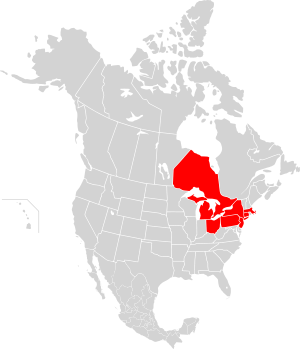 It was the beginning of the Northeast Blackout of 2003, the most widespread power outage in history, affecting about 50 million people in the U.S. and Canada. Dad had worked in the shadow of the World Trade Center for years - he was in London on business on 9/11 - and was ready to return to his office as soon as they reopened about 6 months after the collapse of the towers, undeterred by fear of terrorism or inconvenience of new security measures.
I wish Dad had a YikeBike back then!
 The YikeBike is a folding electric bicycle with a carbon fiber frame and a top speed of 12 mph. Designed for urban use, it's mechanicals are enclosed, protecting them from the elements and adding to its durability. Weighing less than 22 pounds, the YikeBike folds up in about 20 seconds and slips into a shoulder bag. This device would've been perfect for Dad to keep under his desks and could've been part of his urban evacuation plan during an event where normal commuting was unavailable, like the blackout or perhaps even a labor strike.
 The design is clever, described as a mini-Penny Farthing bicycle, the rider sits above the drive wheel and controls direction from the level of the hips. It sounds precarious but when seen in pictures and video, looks quite agile.
Dad finally made it to the Long Island Expressway where my stepmom was waiting for him and eventually made it home after a very long day. If he'd had a YikeBike he would've just made the 6 mile trip in record time and probably wouldn't have trashed those fancy loafers.
Sure, $4900 is a bit much but it certainly looks like fun and with features like anti-skid brakes, built in lights, quick acceleration and the ability to get an 80% charge in about 20 minutes - you get what you pay for: Renewable, Reliable and Remarkable transportation.
View Larger Map
It was the beginning of the Northeast Blackout of 2003, the most widespread power outage in history, affecting about 50 million people in the U.S. and Canada. Dad had worked in the shadow of the World Trade Center for years - he was in London on business on 9/11 - and was ready to return to his office as soon as they reopened about 6 months after the collapse of the towers, undeterred by fear of terrorism or inconvenience of new security measures. I wish Dad had a YikeBike back then!
The YikeBike is a folding electric bicycle with a carbon fiber frame and a top speed of 12 mph. Designed for urban use, it's mechanicals are enclosed, protecting them from the elements and adding to its durability. Weighing less than 22 pounds, the YikeBike folds up in about 20 seconds and slips into a shoulder bag. This device would've been perfect for Dad to keep under his desks and could've been part of his urban evacuation plan during an event where normal commuting was unavailable, like the blackout or perhaps even a labor strike. The design is clever, described as a mini-Penny Farthing bicycle, the rider sits above the drive wheel and controls direction from the level of the hips. It sounds precarious but when seen in pictures and video, looks quite agile. Dad finally made it to the Long Island Expressway where my stepmom was waiting for him and eventually made it home after a very long day. If he'd had a YikeBike he would've just made the 6 mile trip in record time and probably wouldn't have trashed those fancy loafers.
Sure, $4900 is a bit much but it certainly looks like fun and with features like anti-skid brakes, built in lights, quick acceleration and the ability to get an 80% charge in about 20 minutes - you get what you pay for: Renewable, Reliable and Remarkable transportation.
Subscribe to:
Posts (Atom)


 Posts

