Planners are more interested in what Jeremy Faludi describes as engineering versus design, in that engineers reduce impact without requiring changes in behavior but designers looks for ways to reduce impact by making adjustments in habits the focus of a process. This subtle but significant distinction that I recently became aware of will probably make me an outlier among my peers as I insist on including this during conversations.
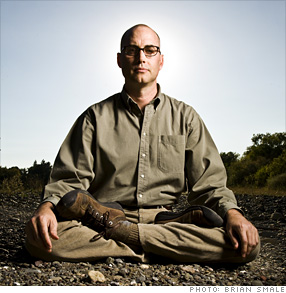 Faludi also identifies persuasion as a science, defining it as "crafting a product's user experience so that the user's actual interaction with the product changes their behavior." I like this but disagree on his claim that BJ Fogg has the monopoly on intellectual property. What Fogg calls Persuasive Technology sounds similar to what Tom Kelley of IDEO writes about in his book, 10 faces of innovation. IDEO has become the leader in user experience design and I think between the both of these two big thinkers, a lot can be learned when merging technical information with big ideas and diverse cultures. Funny, both Tom and Jeremy are both professors at Stanford...
 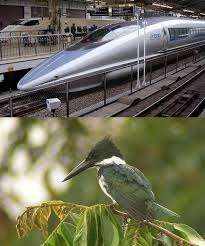 More ideas can be borrowed from Janine Benyus and her ideas around biomimicry, particularly when she describes "bringing a biologist to the table" to solve problems - maybe in this case, more an metaphor for inviting a variety of professionals to the planning process all focused on specific issues but with completely different approaches. Identifying and understanding competing and complimentary agendas are a critical first step in making the leap to Integrated Design. There are opportunities to create real change, and even synergy, here if people are willing to be open-minded and listen.
 One of the first steps in disaster mitigation involves a hazard vulnerability analysis (HVA), a process where a multi-disciplinary team familiar with the project makes a subjective assessment of a community's or facility's weaknesses and tries to determine just how much operations would be impacted under a variety of adverse conditions. The HVA process puts a numeric value on each of the dozens of possible situations that any one community might find itself in. Is the community likely to be flooded and if so, where are the areas that first responders should focus first? What systems can be built to reduce flooding in those most sensitive locations and should they become impacted, what is the process to remove water? These are the kinds of questions an HVA draws attention to. My hope is to introduce sustainable design to the conversation.
 But like any design process, emergency management runs into inertia, as pointed out by Faludi. Mitigation can be very boring when compared to the other formal phases of a crisis: preparation, response and recovery - which are implemented during an actual event versus hypothetical situations. Like any other organization resources (time, money, staff) are limited. In public safety, large incidents are dealt with using the Incident Command System (ICS), a common management structure that is supposed to bring many different organizations under the same umbrella and identify methods to coordinate and combine existing command structures in an effort to reach a successful conclusion to a situation. It is a method to manage a system of systems. The elements of a successful ICS sound very similar to what Nadav Malin identifies as key features of an effective (design) team in the article on Integrated Design:
- Joint decision-making and problem solving (not just individual assignments that are later integrated into a whole)
- Mutual respect and trust
- Effective communication and interaction throughout the entire project, including long-distance communication when the the team cannot be together
- Respect for dissident views
- The ability to deal with conflict
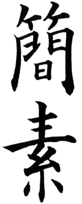 Kanso (簡素) Simplicity or elimination of clutter. Things are expressed in a plain, simple, natural manner. Reminds us to think not in terms of decoration but in terms of clarity, a kind of clarity that may be achieved through omission or exclusion of the non-essential.
Shibui/Shibumi (渋味) Beautiful by being understated, or by being precisely what it was meant to be and not elaborated upon. Direct and simple way, without being flashy. Elegant simplicity, articulate brevity.
Shizen (自然) Naturalness. Absence of pretense or artificiality, full creative intent unforced.
These are certainly atypical themes at an average regional emergency planning committee meeting but I think we a little finesse I can get them into the mix. "Chief, have you ever considered how powerful an understated sense of elegance could be?" - should be interesting to say the least...
By bringing all of these elements to the process I hope to convert Planners to Designers at the intersection of Renewable, Reliable and Remarkable.


 Posts
Posts


No comments:
Post a Comment